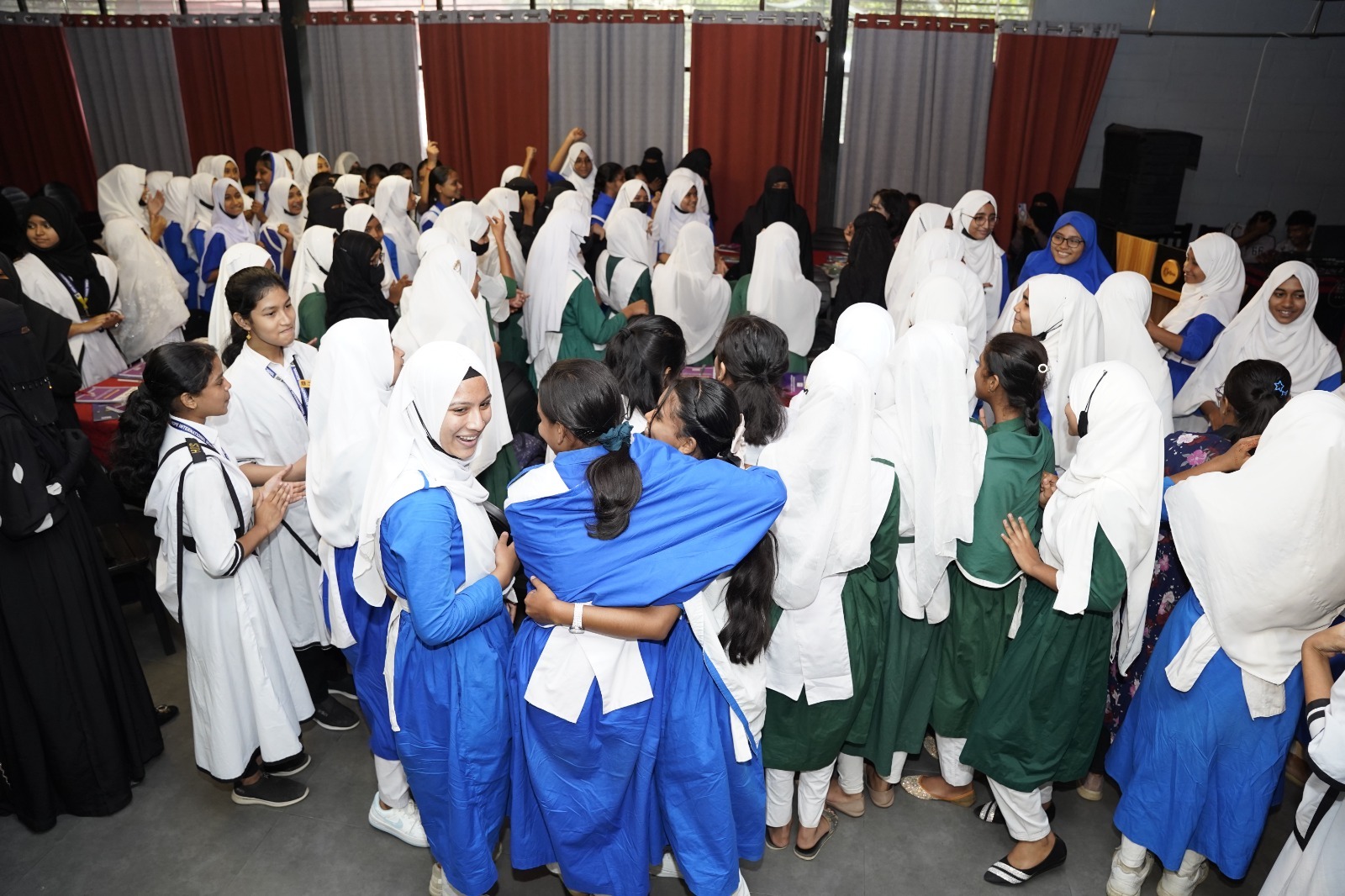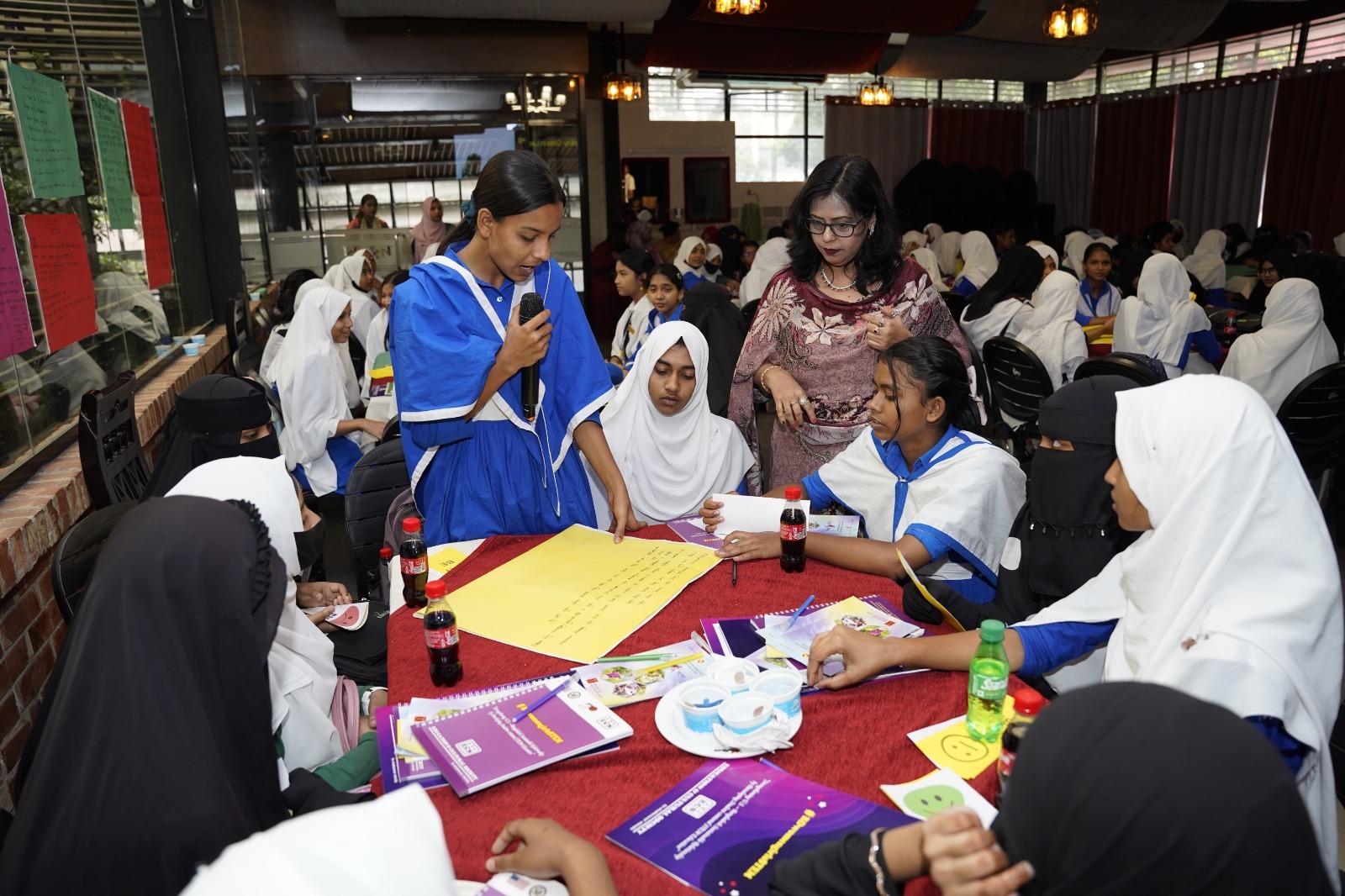

For more than two decades, Nasrin Siddiqa has worked for advancing gender equity and access to quality education for girls in Bangladesh. As a former Echidna Scholar and member of Learning and Action Alliance for Girls’ Agency (LAAGA), she has been using research as a powerful strategy to amplify the voices of marginalized girls. She recognized that the barriers girls face in climate-affected regions like Feni are not limited to educational access— they impact the fundamental agency girls are able to exercise in all aspects of life.
To address these questions, Nasrin launched a collaborative research and action project in Feni district in 2023 — bringing together girls aged 10–19 to define agency in their own words. Through a participatory process, two hundred forty-one girls shared their stories of agency, both the moments of empowerment and the difficult barriers. Many girls described figures around them as important enablers or barriers to agency.
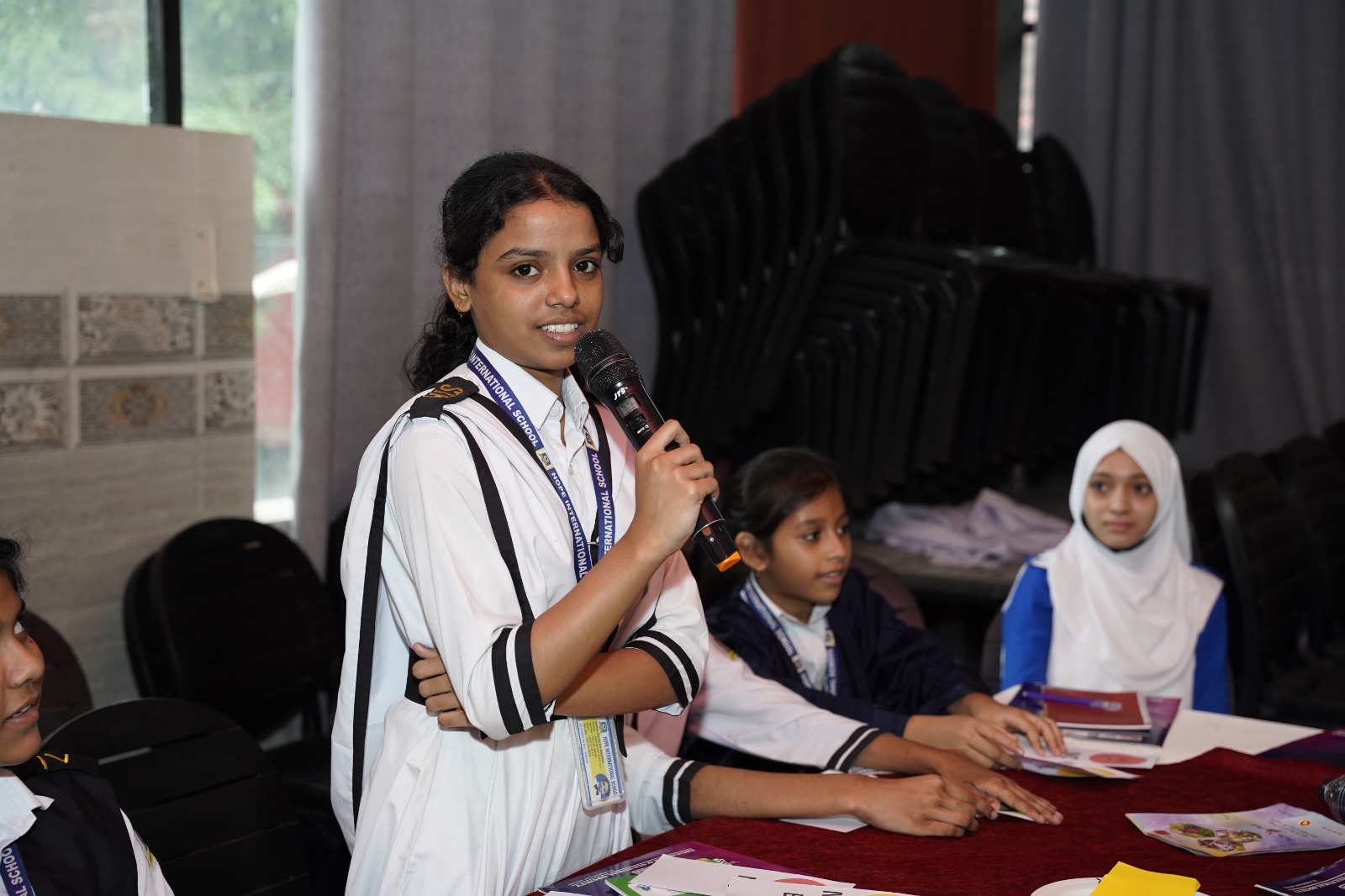
To further engage actors like policymakers, community organizers, families, and teachers with the concept of girls’ agency, three intergenerational community dialogues were held in Feni. Girls presented their findings directly to their peers and community members and received input on the direction their next activities could take.
The research and community dialogues are creating powerful ripples of change in Feni’s ecosystem. Teachers, parents, education officials, and girls themselves are each changing the way they approach education to best promote girls’ agency and success. In the classroom, teachers are using tools developed by LAAGA and new co-created methods to better incorporate participatory methods, including listening and reflection. Once intimidated by the concept of agency, teachers are now using what they’ve learned to better hear and understand the voices of their students. Girls Agency Clubs, a pilot program for developing agency outside of the classroom, will soon build upon these toolkits to expand the reach of girls’ agency.
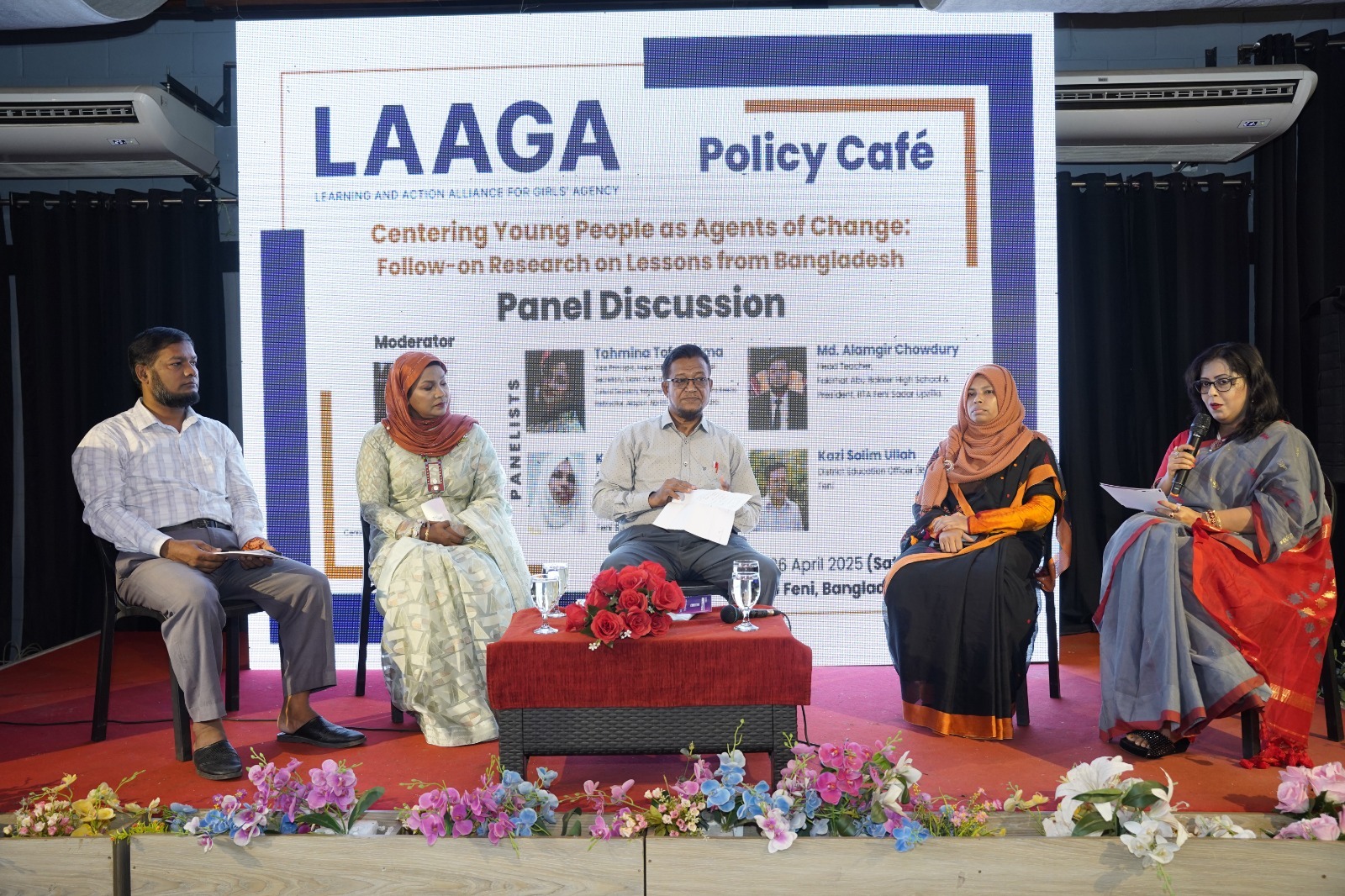
Inspired by the work they’ve seen so far, parents, policymakers and other civil-society organizations are acknowledging the essential role they play in enabling girls’ agency and taking greater ownership of the research moving forward. The District Education Officer expressed interest in scaling the LAAGA-led teacher training on girl-centered practices across the district, following participation in a training session conducted as part of a LAAGA action project. Several civil-society organizations have also begun implementing the collaborative research approach in their own contexts.
The real change has stemmed from the leadership of the girls themselves. The collaborative research approach has empowered girls to become decision makers in their own rights, speaking up about their experiences and asking the important questions about their future. Mapping their own challenges and presenting this information to the education actors who are best positioned to help not only encourages action on the identified issues, but builds the necessary confidence for self-advocacy within the girls. With schools, communities, and government increasingly aligned, girls are no longer just participants- they are emerging as true agents of change.