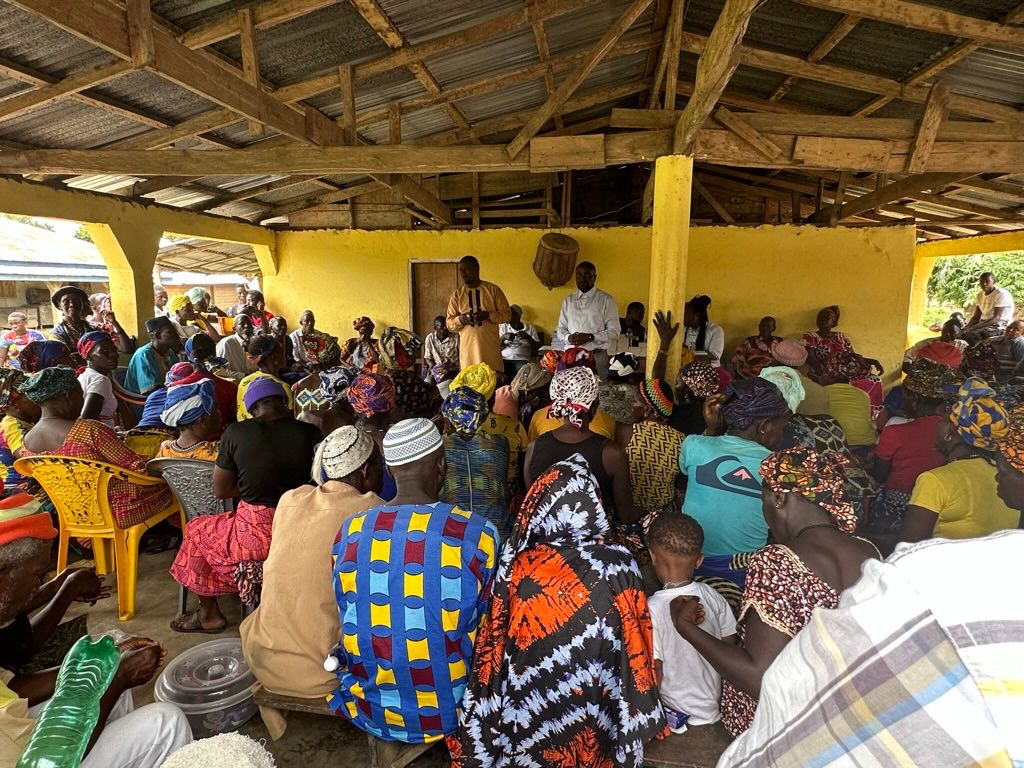
In Sierra Leone, the Ministry of Basic and Senior Secondary Education (MBSSE) has long identified strengthening family, school, and community engagement (FSCE) as a priority. As outlined by the National Policy on Radical Inclusion in Schools (2021) and other key Sierra Leonean legislation, FSCE is an essential part of a student’s educational success and therefore deserves nationwide investment and support.
Despite their belief in the importance of FSCE, MBSSE lacked the relevant evidence on the state of community-school partnerships needed to develop effective engagement strategies. Little was known about how well, if at all, marginalized students and families were able to engage in the education system and make their unique needs heard.
To bridge this gap between vision and reality, the MBSSE invited the Center for Universal Education (CUE), in collaboration with EducAid and Rising Academies to conduct research on families’ and educators’ beliefs and experiences with education. Once the status-quo of FSCE had been understood, the study would aim to identify promising strategies for promoting greater FSCE. CUE provided research tools, methodology, and ongoing support while EducAid and Rising Academies focused on using their field-level connections to facilitate the research process in twenty-five government schools.
Using the Conversation Starter Tools research methodology, the researchers conducted focus groups and administered surveys. Developed by the CUE, this research approach diverges from traditional methods and instead focuses on developing relational trust, shared understanding, and contextualized solutions. The use of Conversation Starter Tools allowed the research project to engage all members of the school ecosystem in meaningful dialogue- including— especially those whose perspectives are often underrepresented in education decision-making. For instance, all stakeholder surveys were conducted either in-person or virtually to provide greater accessibility for families without the skills or technology to complete a written or digital survey.
Across three districts, nearly two thousand primary school parents and teachers openly shared their educational priorities for students, the avenues currently used for FSCE, and the largest barriers faced in establishing more inclusive FSCE. Equipped with new qualitative and quantitative data which incorporated a breadth of perspectives, EducAid and the MBSSE could begin taking the next steps toward addressing the current status of FSCE and other related issues.
One significant research finding revealed that many families- especially the ≅44% who never attended school- felt excluded from influencing their children’s education, which often led to misunderstandings and blame around issues like chronic absenteeism. By centering these parent perspectives, EducAid is now creating clearer communication, stronger family‑school collaboration, and more inclusive strategies to address absenteeism at its roots.
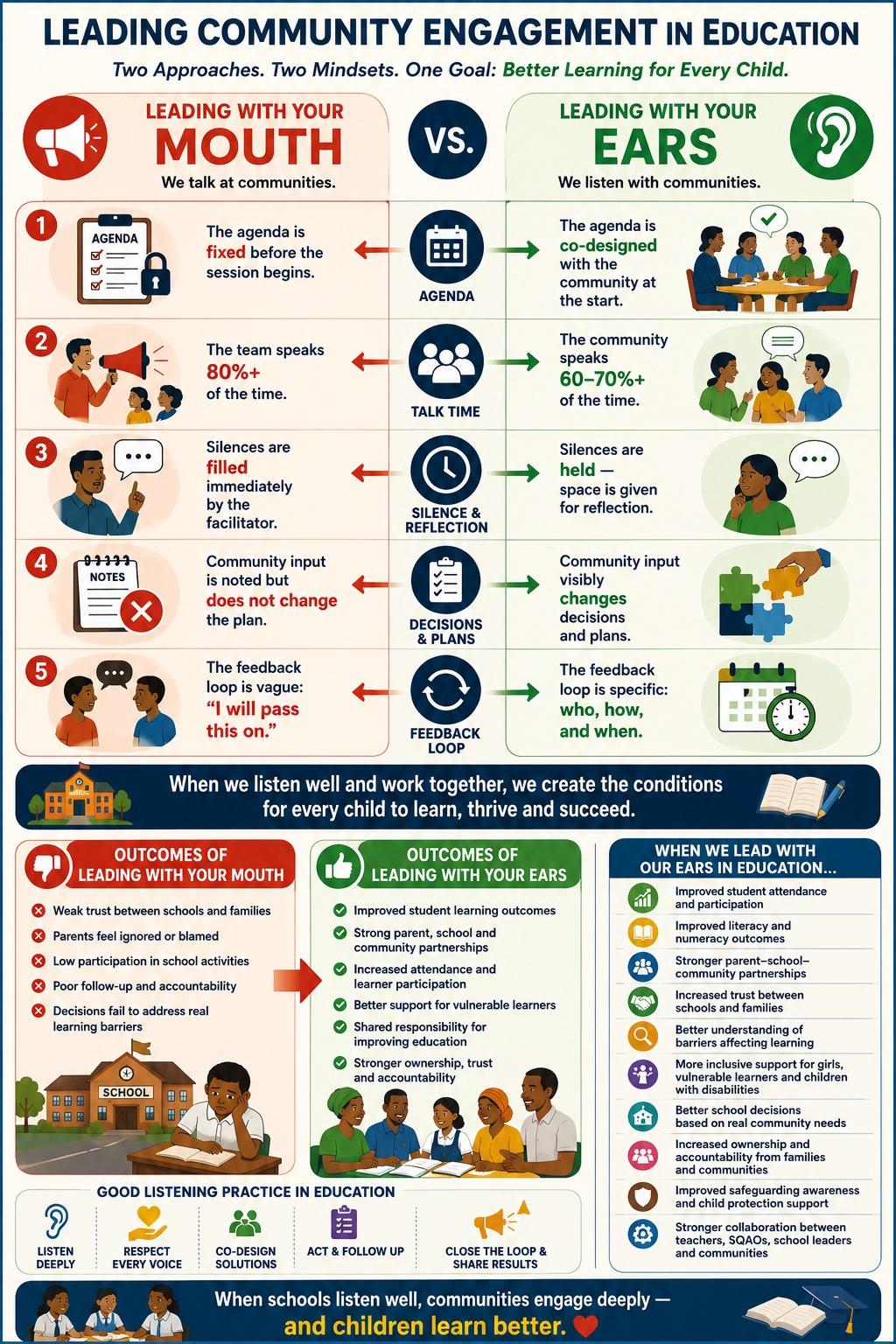
Collaborative research is helping create a significant culture shift towards greater partnership with families and communities and open-minded listening in Sierra Leone. EducAid is helping to institutionalise this approach by providing official opportunities for diverse stakeholder input. During Listening Community Engagement meetings, parents are invited to discuss their priorities for their children’s education, using images, making the conversation accessible to literate and illiterate parents. Community Teacher Associations, now included in most Sierra Leonean schools, join teachers, parents, and community members together in the education process by providing an outlet for leadership and input outside of the school. During engagement meetings with communities, the agendas are co-created, community representatives chair the meetings and there are deliberate attempts to ensure conversations are respectful, inclusive and “ears-led.”
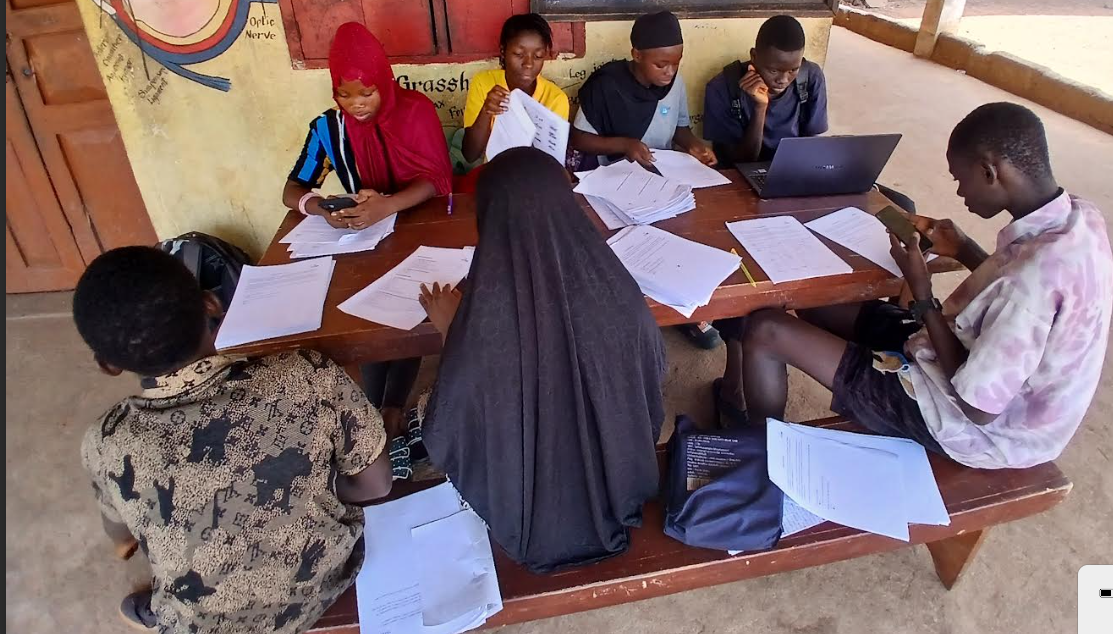
Moving towards greater collaboration, EducAid has begun piloting a new student-driven research approach. Youth-centered research reorients students at the forefront of the improvement process, valuing the voices of those who are most immediately affected by shifts in educational operations. EducAid is training student researchers to collaboratively examine students’ beliefs and habits related to chronic absenteeism and to co-develop solutions with students to improve attendance, engagement, and learning. Through programmes like youth-centered research, EducAid and the Ministry of Education will expand the culture of listening and learning across all sixteen Sierra Leonean districts.
This story was documented in collaboration with Miriam Mason-Sesa, Foday C Kalokoh and Abby Couralis from EducAid—member organization of the Global Family Engagement in Education Network (FEEN). The story was edited by Madeline Chandler and Mashhood Bhat from Brookings Center for Universal Education.
The Global Family Engagement in Education Network at the Center for Universal Education is leading a global network of education actors and collaboratively developing tools, research, and strategies that build strong partnerships between families, schools, and communities. Family, school, and community engagement partnerships promote student learning, well-being, and development and support schools to thrive.