Since 2017, the Kenya Institute of Curriculum Development has phased out the 8-4-4 model in favor of Competency-Based Education (CBE). For over thirty years, the 8-4-4 system divided education for Kenyan students into four phases: primary, secondary, and university. While the former system emphasized practical skills and self-reliance, it faced criticism for its reliance upon content-heavy examinations. Through the CBE, students are no longer defined by a test; the focus shifts toward a holistic view of the student based around seven core competencies. CBE does not simply revitalize an outdated curriculum: it attempts to radically restructure the education ecosystem for a modern generation.
Although CBE has been officially adopted by the Ministry of Education, its application varies from classroom to classroom, revealing a gap between policy intent and reality. The Dignitas Project, a member of the Knowing Doing Network and the Network for Education Systems Transformation (NEST), recognized that the success of CBE depends not just upon system-wide restructuring, but grassroots support and participation. Dignitas set out to understand how CBE was being experienced by education actors, what barriers to adoption existed, and what successes had been experienced since the rollout.
As a part of NEST and a partner of the Brookings Institution, Dignitas formed its study around a central research question: How well are education systems creating opportunities for children and young people to learn what matters? Specifically within Kenya’s educational environment, three sub-questions relevant to the ongoing launch of CBE emerged: how are CBE competencies integrated into teaching and learning, how do stakeholders engage with CBE, and what can be done to improve consistent CBE implementation across diverse socioeconomic contexts?
The results illuminated how multiple interconnected conditions must be aligned for genuine systems transformation. For instance, teachers’ capacity to enact CBE is shaped by the quality of their preparation and the resources available to them which are factors dependent upon much larger issues of access and equity. The study concludes that expanding decentralized professional development, strengthening institutional coordination, engaging parents, redistributing school‑level decision making power, and ensuring equitable access to resources are essential to transforming the CBE from policy aspiration into lived practice.
Using the findings from the Breadth of Skills study, Dignitas has set out to increase education actors’ commitment through their Life Skills and Values Programme. Currently being delivered in one of the key counties from the study, the programme is transforming the attitudes, outlooks, and knowledge of system actors at the county and sub-county levels. To address the gaps in teacher preparation discovered by the study, Dignitas is also helping to increase the capacity of pre-service educators. Coaching and mentoring opportunities for teacher trainees ensures that future classrooms are being equipped with the most effective and knowledgeable educators possible. Many of the actors involved in the early stages of these programmes have commended the collaborative approach and are searching for further opportunities to extend the impact of the study. Within Diginitas itself, the Breadth of Skills study has already sparked a significant shift towards the co-creation of education systems transformation and the amplification of stakeholder voices.
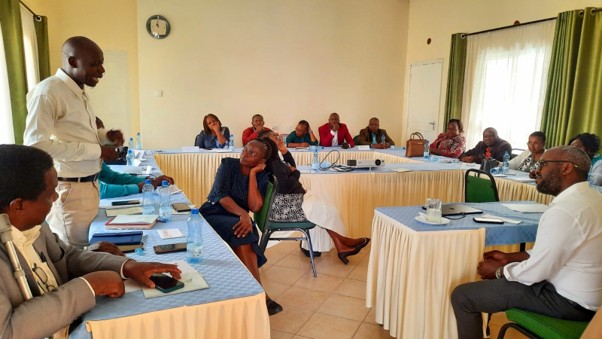
As the study’s results highlighted the collaboration necessary for transformation, Dignitas has taken advantage of opportunities to present their research to a variety of stakeholders. Dignitas has presented findings locally and internationally at three conferences: Kenya Teacher College Principals Association, Education Evidence for Action, and Comparative and International Education Society. KTCPA is an association for teacher training college principals while EE4A is a biennial conference that takes place every two years whose objective is to bridge the gap between evidence and action, bringing together government, CSOs, researchers, academia. These forums gave Dignitas the platform to share findings from their study and emphasize recommendations. Both audiences were receptive to the ideas presented and eager to find greater opportunities for teacher professional development in support of CBE. The results of the conferences were not limited to simple policy dissemination, but an open dialogue between researchers, educators, and policymakers that reinforced the value of collaboration in advancing systemwide transformation.

For Dignitas, there is still more work to be done to accomplish the full, inclusive implementation of CBE and prepare Kenyan students for the 21st century. Plans are underway for several additional 2026 national-level meetings to engage key education stakeholders in the study findings and spark conversations surrounding Breadth of Skills and how it might be further implemented. Dignitas will also focus on the co-creation of greater resources with various education actors to emphasize ownership, relevance, and long-term sustainability.
This story was documented in collaboration with Nancy Gikandi from Dignitas— a member organization of Network on Education Systems Transformation (NEST). The story was edited by Madeline Chandler and Mashhood Bhat from Brookings Center for Universal Education.


The Network for Education Systems Transformation (NEST) is a global network co-led by civil society organizations from the Global South united to understand and catalyze the transformation of education systems to help all learners develop a breadth of skills. NEST member organizations are located in 11 countries across Africa, Latin America, the Middle East, North America, and South Asia. The Center for Universal Education (CUE) at Brookings, seated in the U.S. is the 11th organization in the network and serves as the coordinating entity.