In 2022, as a member of Network on Education Systems Transformation (NEST), SAQE embarked on collaborative research exploring: How well are education systems in Pakistan creating opportunities for young people to learn what matters? An advisory group of officials and civil society experts helped shape it.
The findings were sobering: millions of children still can’t access school, and those who do, often graduate without the critical 21st-century skills needed for civic and economic participation. The research laid out a roadmap for systemic transformation centered on one core shift: redefining education’s purpose toward skills-based learning that develops critical thinking, digital literacy, collaboration, and resilience.
To translate research into action, SAQE deployed a multi-tiered strategy — mobilizing grassroots communities, then bridging those conversations to provincial, national, regional, and international levels. A district student skill-mapping survey was administered across 12 districts to capture aspirations of Grade 10 and 12 students at the grassroots. Findings informed district-level dialogues — chaired by District Education Officers and attended by multi-sectoral actors — to examine insights and chart reform pathways. Provincial mini-conferences then convened multi-sectoral actors to share preliminary findings and launch dialogue on skills-based education.
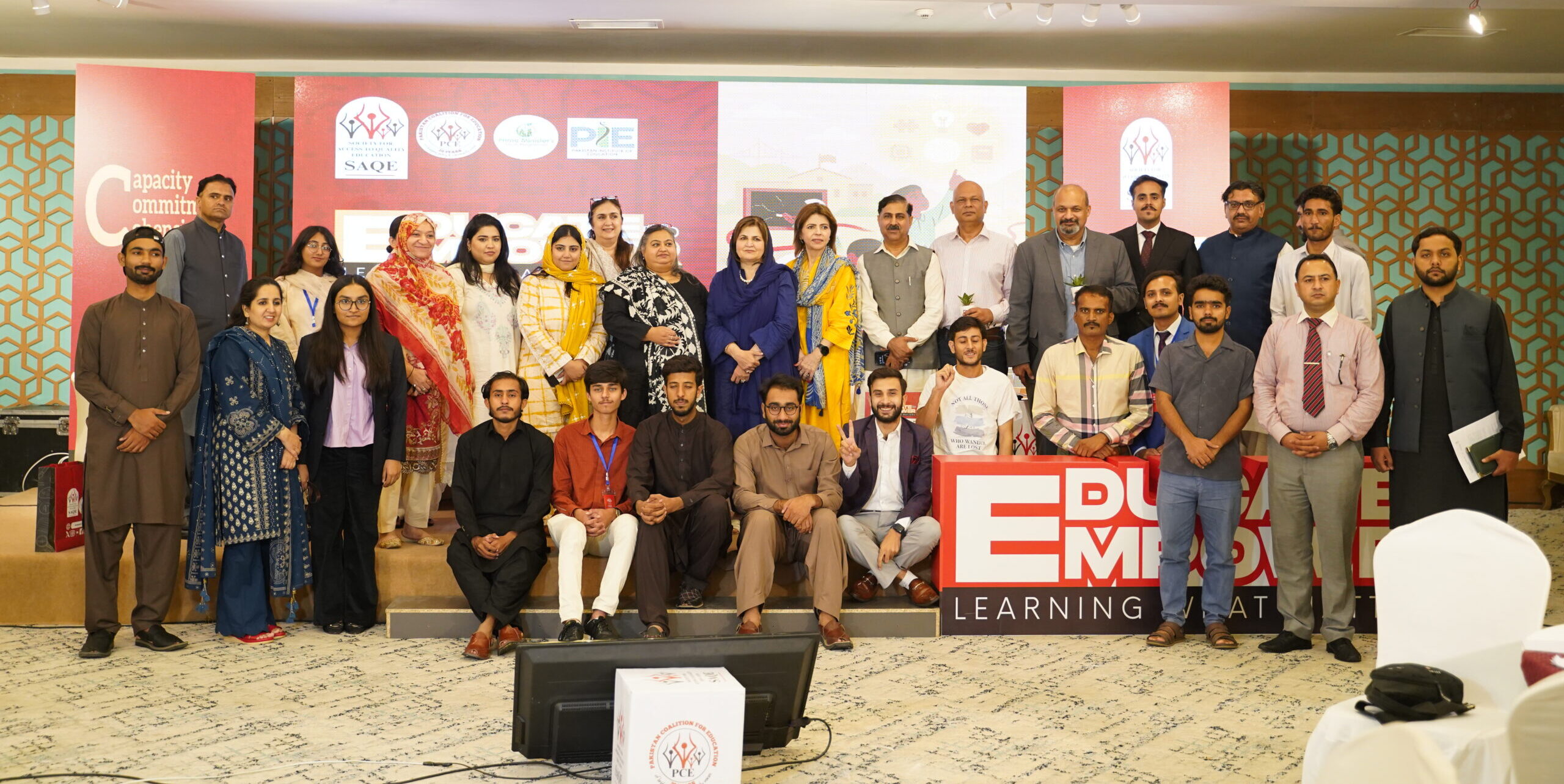
On World Skills Day 2025, SAQE held a major National Education Conference with the Pakistan Institute of Education (PIE) and the Prime Minister’s Youth Programme (PMYP). Anchored in the theme “Learning What Matters,” it brought together federal and provincial officials, development partners, researchers, practitioners, and youth from across the country. SAQE’s NEST research and member-led district skill-mapping scorecards were launched — bringing grassroots work to the national stage.
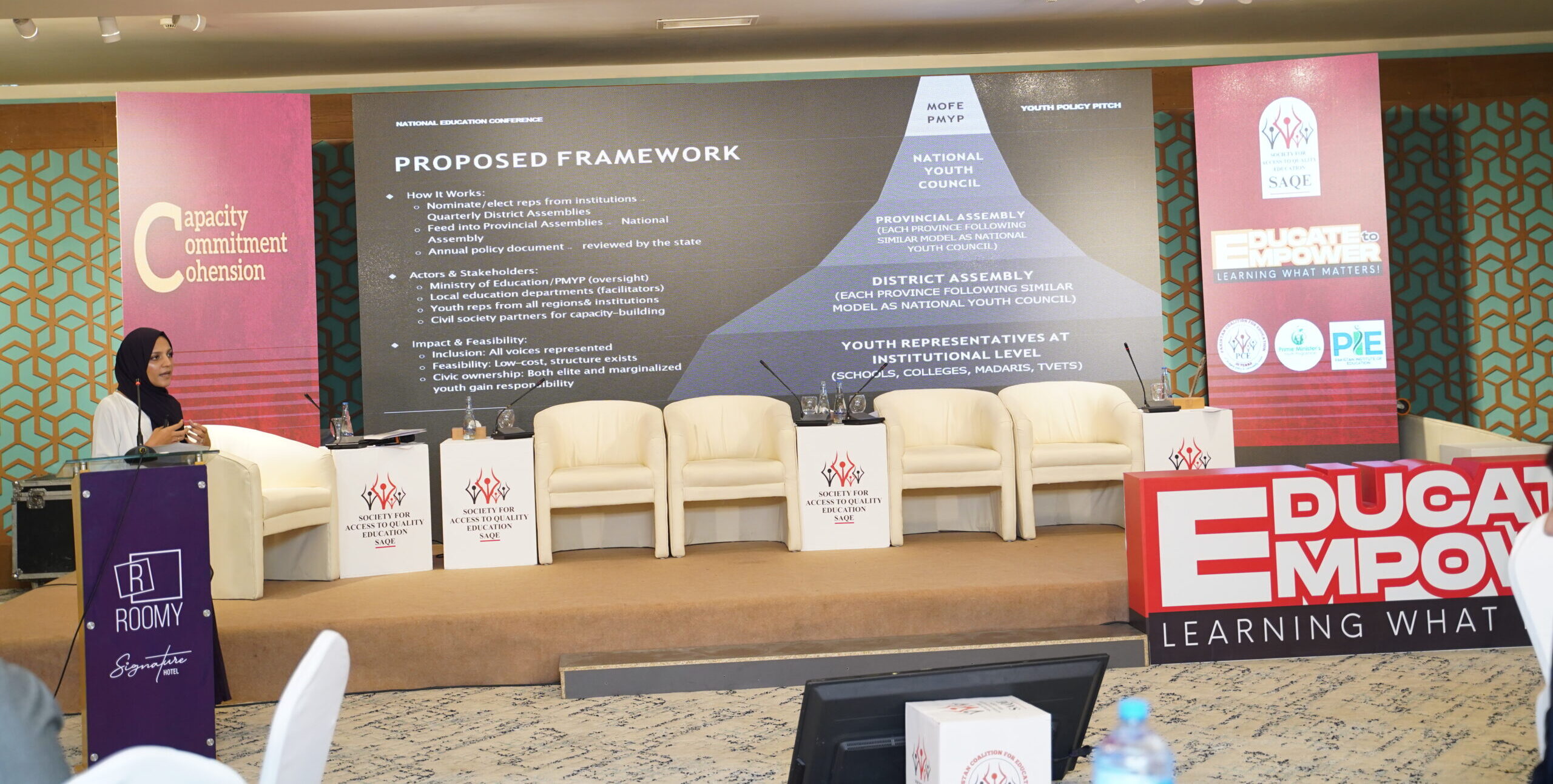
The conference aimed beyond sharing findings: to create space where evidence, lived experience, and decision-making authority could converge toward durable change. The defining moment was the youth-led policy pitch session, where young people presented concrete proposals for reimagining education drawn from their own experiences. Their voices, as well as the expert perspectives from the panels shaped the conference’s central output: the Declaration on Skills-Based, Youth-Centred Education Transformation.
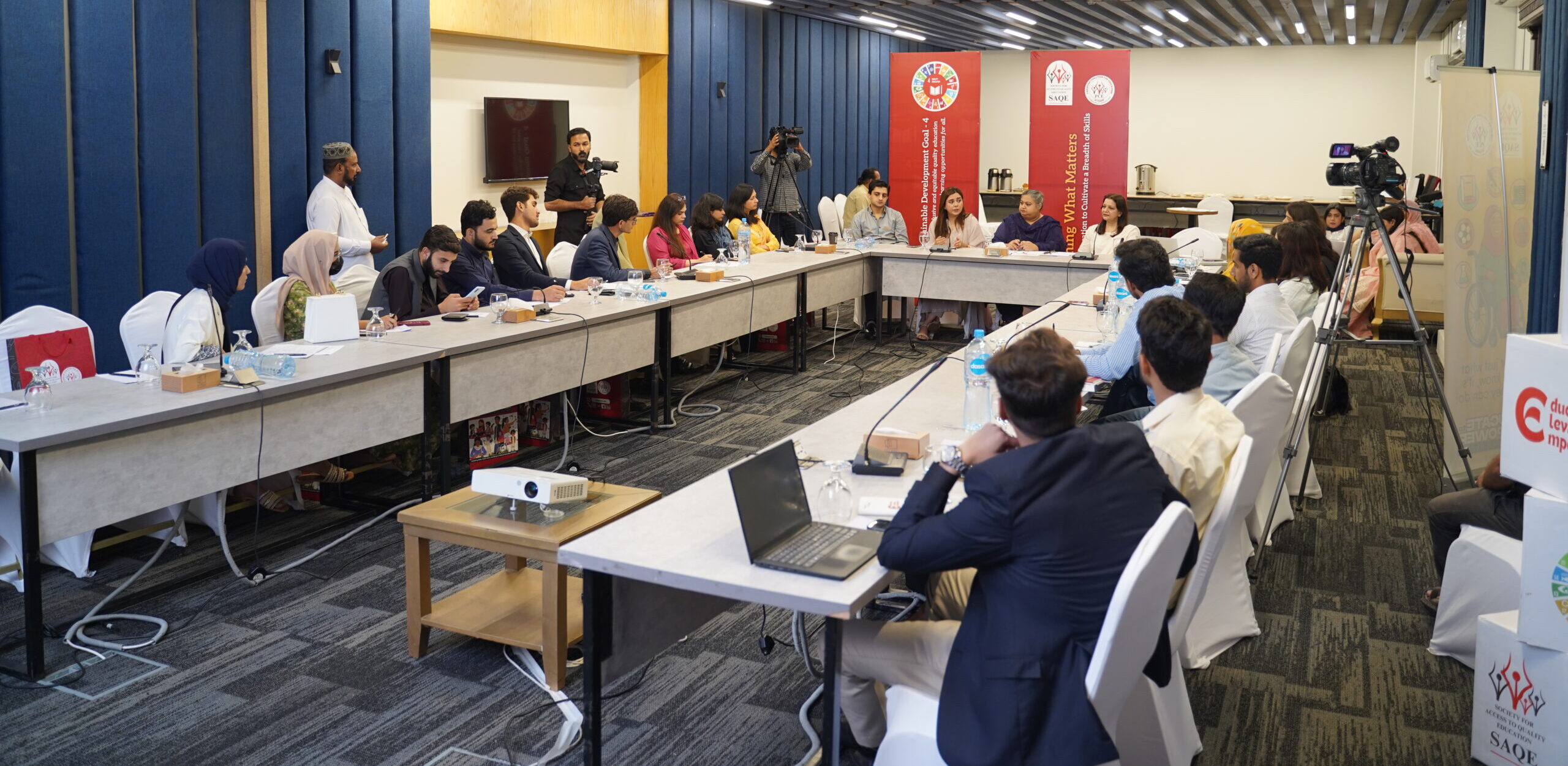
Knowing Pakistan’s first National Adolescent and Youth Policy (NAYP) was under development, SAQE also convened a high-level youth roundtable chaired by PMYP focal persons — giving young people direct access to the officials shaping national youth policy. They shared experiences, identified gaps, and presented recommendations that mirrored SAQE’s NEST findings.

Policymakers are formally committing to youth-led recommendations, ecosystem actors are building new partnerships, and youth are actively helping shape decisions around education and skills policy in Pakistan.
Commitment among policymakers: At the National Education Conference, senior education officials formally signed the declaration. The Parliamentary Secretary for Education publicly endorsed it and signaled openness to continued engagement — a meaningful marker of federal political commitment. Officials committed to incorporating youth recommendations into upcoming policies and programmes.
Something has shifted: a generation once spoken about is now speaking for itself, and decision-makers who once worked in parallel are beginning to collaborate.
Cohesion among ecosystem actors: The collaborative research and action process has laid the ground for new partnerships around skills and youth. SAQE’s relationship with PIE that begun on this agenda at the National Conference, has grown into active co-leadership of NEST phase-2 research on youth agency, with PIE supporting school-level data collection and policy uptake. PMYP is similarly engaged, tracking phase-2 findings for youth policy reform.
Digital mediums are also being used to amplify the insights from this work and inform public opinion on education and youth. SAQE co-produced a podcast with the Chairperson of the National Vocational and Technical Training Commission on skills-oriented learning. In addition, its flagship series Let’s Talk Education sustains ongoing discourse, while the documentary Learning Against All Odds: Skills for a Changing Pakistan is being released through thematic reels ahead of its full launch.