In Malawi, CRECCOM’s Collaborative Research and Action is breaking government silos, amplifying youth voice, and empowering young people to inform the education and skills policies that define their futures.
In Malawi, more than 80 percent of young people of secondary school age are not enrolled in secondary education. Although transition rates from primary to secondary school have improved to just over 50 percent, many learners still do not progress beyond primary. Of those who do enter secondary school, only a small fraction complete the cycle, and fewer still reach tertiary education, where participation remains below one percent.
For over two decades, the Creative Centre for Community Mobilization (CRECCOM) has been working at the grassroots of Malawian society to change this picture. Through projects spanning education, gender equality, youth development, health, and social protection and accountability, the organization has built its approach around a single conviction: that communities, when genuinely involved, become the most powerful drivers of their own development.
In 2024, in partnership with NEST, CRECCOM began research to investigate how effectively Malawi’s secondary education system is developing 21st-century skills. The research involved multi-stakeholder consultations and workshops bringing together ministries responsible for human capital and skills development — Education, Youth, Labor, Gender”, Community Development and Social Welfare and Finance — alongside key work sectors including mining, tourism, and agriculture.
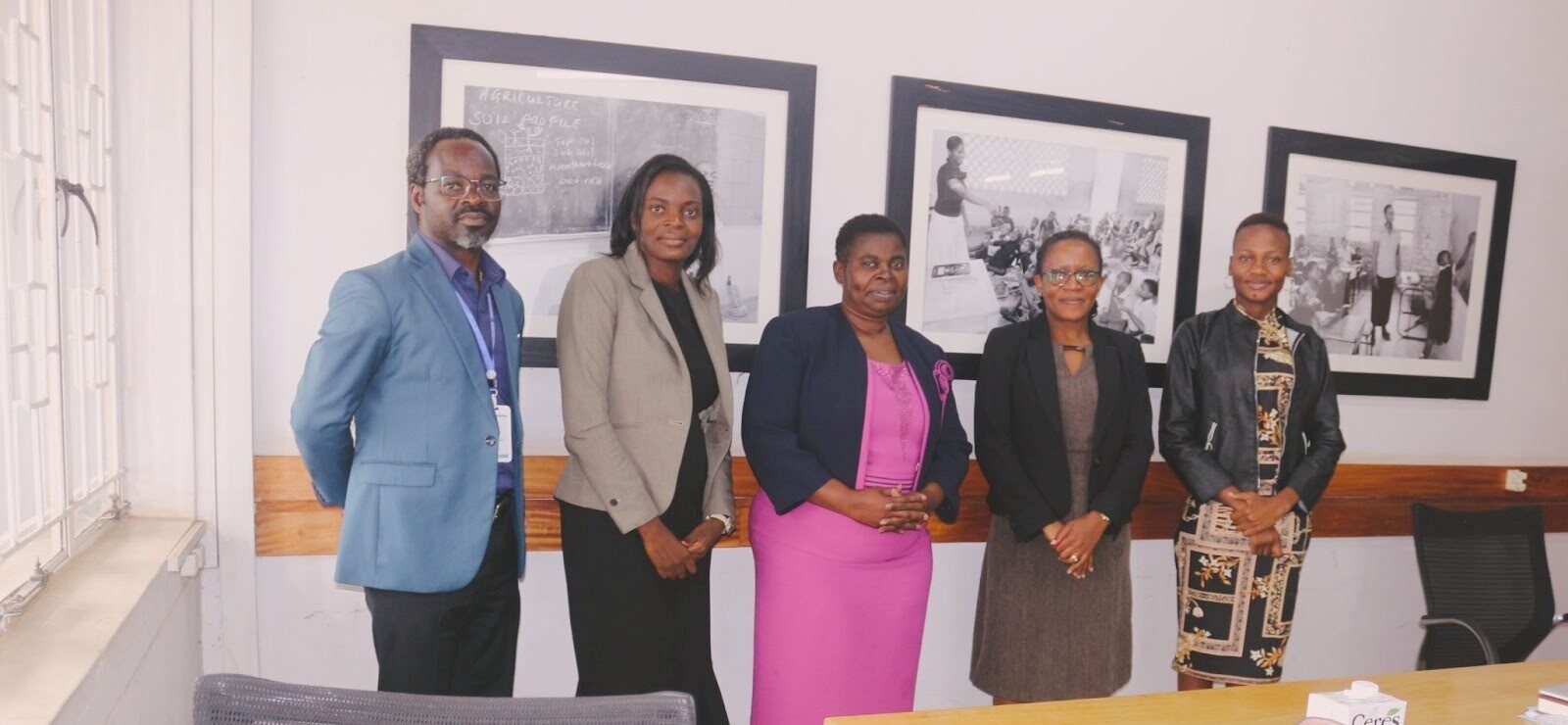
CRECCOM team meeting with Malawi’s Former Secretary of Education as part of research consultations
Building on this foundation, CRECCOM conducted a second phase of research on youth agency in 2025. A comprehensive review of Malawi’s Vision 2063, the National Youth Policy, and the National TEVET Policy found a consistent pattern: while all three frameworks spoke positively about youth as development actors, the enforceable mechanisms, costed plans, and institutionalized roles needed to put this into practice were largely absent.
To bring a direct youth voice into the research, CRECCOM established a Youth Advisory Group (YAG). The YAG was set up through a participatory process that included consultations with relevant ministries on the selection criteria. YAG Members — aged 18 to 24, including rural girls and other marginalized youth with diverse needs— were oriented on research ethics, youth-led research, and research tools. They played a key role in designing and contextualizing the research guides, protocols and survey. For many YAG members, this was also the first time they had engaged directly with senior government officials on youth issues.
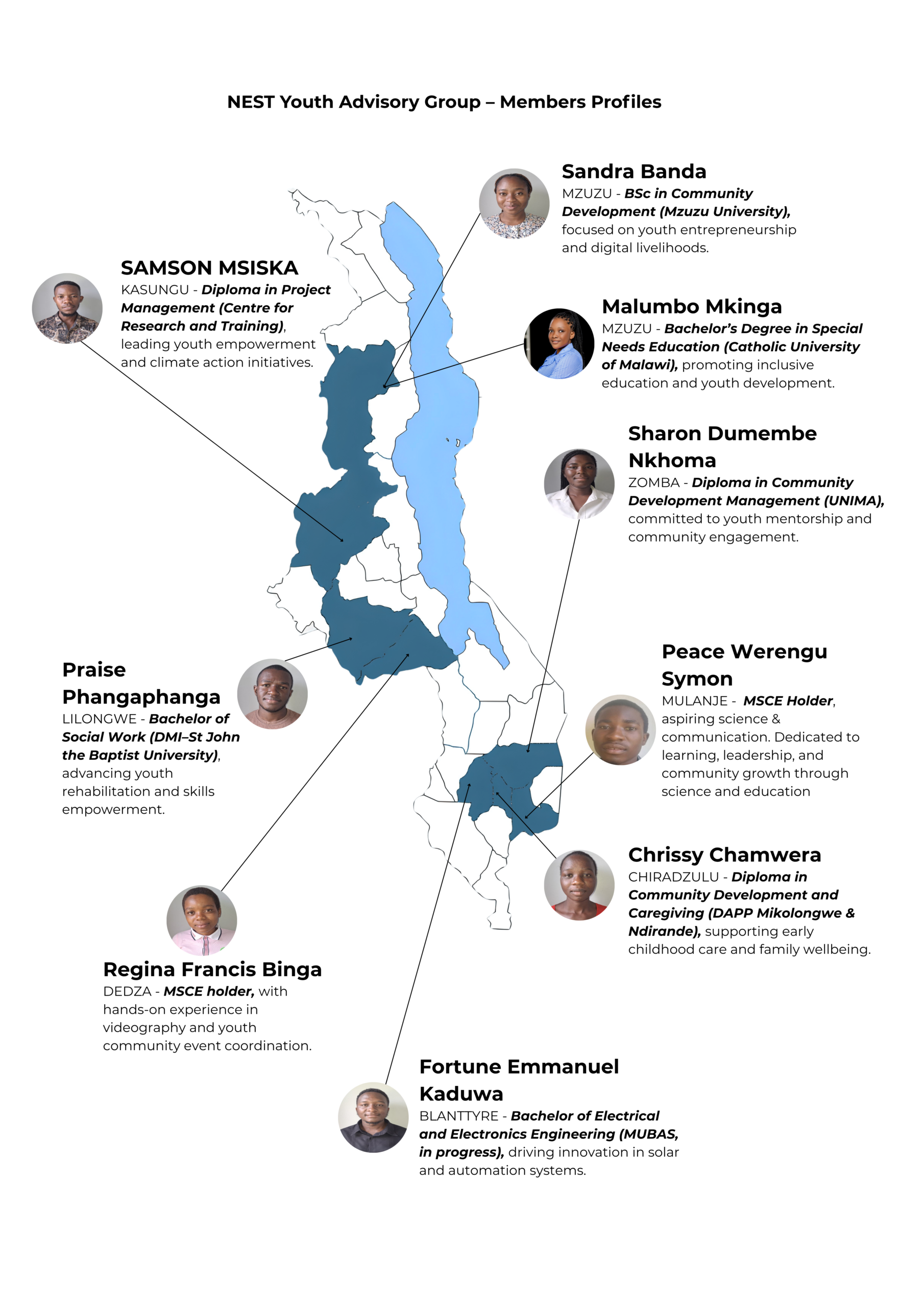
Youth Advisory Group included members aged 18-24 years and represented different regions of Malawi
The research and engagement process is creating new conditions for meaningful collaboration across government departments and sectors, deepening commitment to inclusive youth participation in policy, and building the confidence and skills of young people as active contributors to evidence and policy.
Cohesion across ministries and sectors: A key insight from the first phase of research was that the ministries responsible for human capital development had limited contact with the economic sectors that employ young people, and there was a mismatch between what national policies envisioned, the skills workforce needs to develop, and what young people were actually being prepared for. The conversations highlighted this mismatch across different actors. Officials from the Ministries of Mining, Tourism, and Finance described the meetings as an eye-opener, and began thinking through solutions within their own departments. The Ministry of Tourism, for example, identified the need to formalize training for young people in sector roles such as tour guiding.
Commitment to inclusive youth participation: Officials from the Ministry of Education, among others, are signaling their commitment to youth participation in education policy and governance. For example, Ministry officials worked with the Malawi Council for Disability Affairs to ensure a young person with a disability was included in the YAG — a concrete signal of a broader commitment to equity in the research and advocacy process.
Capacity of young people as researchers: YAG members developed research skills and strong sense of ownership over using the evidence to advocate for youth issues. Several members expressed how this experience positively shifted how they see their own role in processes that affect their education and well-being.
Building on this momentum, CRECCOM will support the YAG to translate research findings into action. The group will continue to engage policymakers, share findings through youth clubs, networks, and other platforms, and contribute to education policy discussions to ensure youth perspectives are reflected in decision-making.
Future efforts will focus on embedding the YAG structures within existing education and governance systems — advancing cross-sector dialogue, supporting evidence-informed decision-making, and expanding youth participation in policy and curriculum review, budget consultations, and education reform processes.
This story was documented in collaboration with Linice Sanga and Nephitaly Benister from CRECCOM— a member organization of Network on Education Systems Transformation.
The Network for Education Systems Transformation (NEST) is a global network co-led by civil society organizations from the Global South united to understand and catalyze the transformation of education systems to help all learners develop a breadth of skills. NEST member organizations are located in 11 countries across Africa, Latin America, the Middle East, North America, and South Asia. The Center for Universal Education (CUE) at Brookings, seated in the U.S. is the 11th organization in the network and serves as the coordinating entity.